


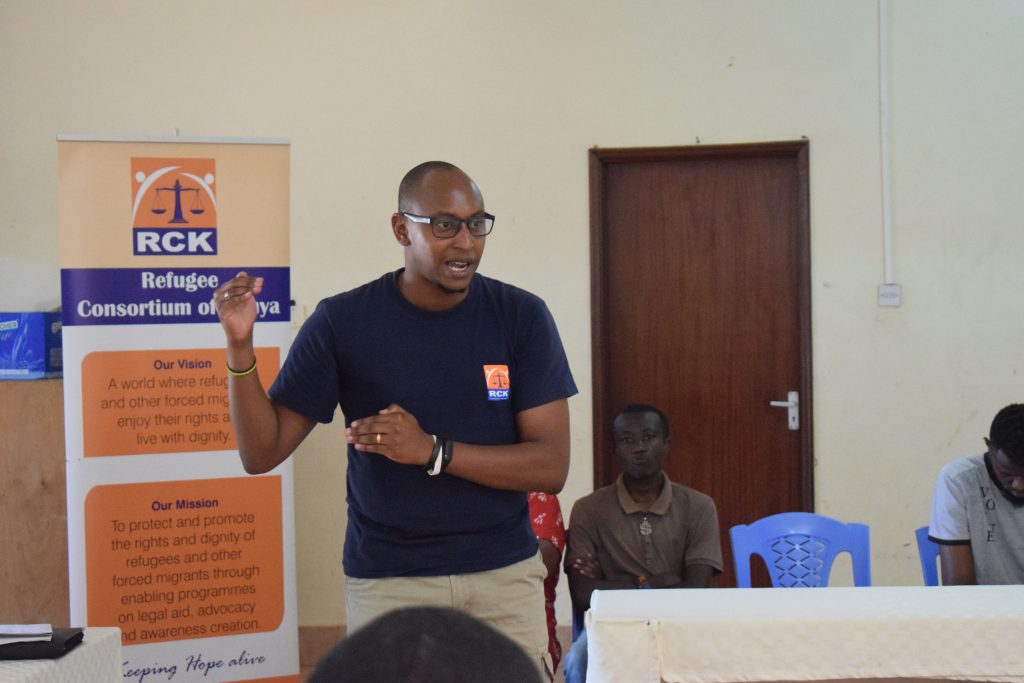

Regional Leadership for Work Rights
We work alongside governments, organizations, communities, and
development partners across East Africa to strengthen labor systems
and create opportunities that support fair, safe, and inclusive
employment for all. Through collaboration and advocacy, we help
promote policies that protect workers and encourage sustainable
economic growth.
Our initiatives focus on improving access to decent
work, supporting workforce development, and advancing inclusive labor
practices that empower individuals, strengthen communities, and create
lasting social impact.
Our Areas of Work
From policy advocacy to on-the-ground programs, our work spans three interconnected areas — each designed to address structural barriers, strengthen livelihoods, and expand access to fair economic opportunities for refugees across East Africa.

Labor Law Reform
We engage directly with governments across Kenya, Uganda, and Tanzania to push for legal frameworks that recognize refugees' right to work, removing restrictive permit barriers that limit economic participation.
Learn more
Regional Policy Dialogue
We convene multi-stakeholder forums that bring together governments, private sector actors, and civil society to shape inclusive labor policies across the East African Community.
Learn more
Community Representation
Refugee voices must lead refugee policy. We support refugee-led organizations to participate meaningfully in national and regional decision-making processes that affect their rights and livelihoods.
Learn moreWorkforce Development
Our skills training programs equip refugees with market-relevant competencies — from trades and hospitality to finance and entrepreneurship — aligned with real employer demand in local and regional markets.
Financial Inclusion
We work with microfinance institutions and mobile money providers to expand access to savings, credit, and insurance products for refugees and host community members, strengthening financial resilience.
Host Community Integration
Sustainable inclusion requires that both refugees and host communities benefit. Our joint livelihood programs strengthen social cohesion and shared economic opportunity at the local level.
Entrepreneurship Support
We provide seed funding, mentorship, and business development resources to refugee-led micro-enterprises, enabling sustainable self-employment and community economic growth.
Connecting refugees to the global digital economy
We train refugees in remote-ready skills — data entry, graphic design, customer support, and software development — opening pathways into the global digital economy from any location.
We connect trained refugees to platforms like Upwork, Fiverr, and Toptal, providing mentorship and startup support to help them earn sustainable income through freelance digital work. We also advocate for platform accountability so workers are fairly paid and properly recognised.

Where We Make a Difference
Four pillars of impact, each advancing dignified work and economic inclusion across East Africa.

Policy & Legal Advocacy
We work with governments and institutions to reshape policies that enable equitable access to employment across East Africa.

Workforce Training
Practical, real-world training programs that prepare individuals for sustainable and adaptable careers in a changing economy.

Research & Insights
Data-driven insights that inform policy decisions and strengthen inclusive economic strategies with ground-level evidence.

Community Programs
Ground-level initiatives that unlock opportunities for underserved communities and expand access to dignified work.
Our Programs
Our programs advance refugees' access to safe, lawful, and dignified work across East Africa. Through targeted policy advocacy, research-driven initiatives, and employer engagement, we create opportunities that empower refugees to build livelihoods and achieve economic self-reliance.

Economic Inclusion at Local Markets
Supporting refugee women traders with market access, cooperative structures, and financial literacy to build sustainable micro-enterprises.
Learn more
Vocational Skills & Workforce Training
Practical skill-building initiatives in tailoring, construction, and hospitality — improving employability and long-term economic resilience.
Learn more
Policy & Legal Advocacy
Engaging governments and institutions to reform laws and policies that support equitable employment access for displaced populations.
Learn more
Research & Insights
Evidence-driven analysis guiding policy dialogue and strengthening labor inclusion strategies across the East Africa region.
Learn more
Community Outreach Programs
Collaborative outreach expanding opportunity pathways across underserved regions, partnering with civil society and the private sector.
Learn moreExplore All Our Programs
Discover the full range of initiatives driving dignified work and economic inclusion across East Africa.
View All ProgramsMembers & Partnerships
Organizations we work alongside to advance dignified employment for refugees across East Africa.


